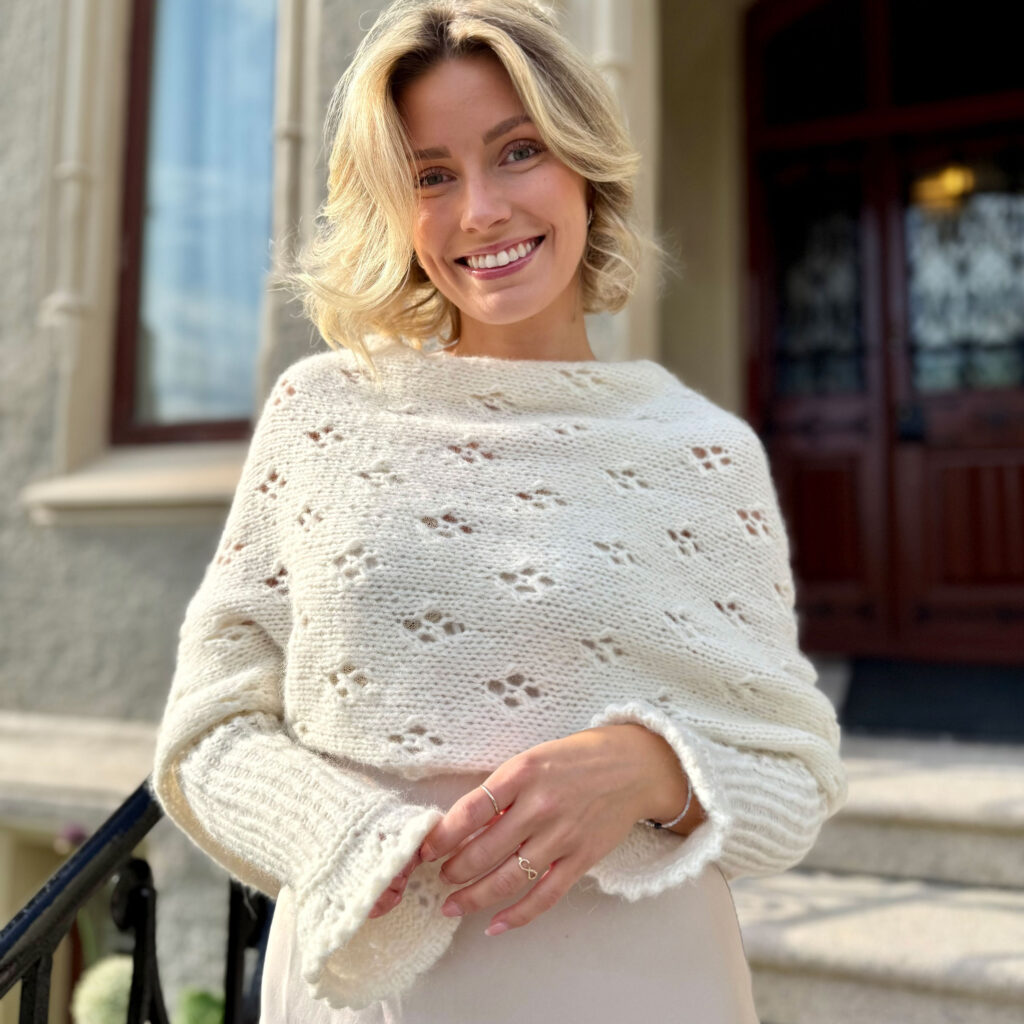
Knitting a Gift Without Their Measurements
You've found the perfect yarn, you've got a free weekend, and you want to cast on a handmade gift for someone special. There's just one problem: you have no idea what size they wear, and asking would ruin the surprise. Good news — you don't need a tape measure to knit something that fits beautifully. You just need to pick the right project and understand a few sizing tricks that professional knitwear designers rely on all the time.
This guide walks you through choosing a knitting pattern for someone else's sizing when you're working blind, so your gift lands as thoughtful rather than awkward.
Why Gift Sizing Feels So Hard
Sweaters and fitted cardigans are unforgiving. A few inches off in the chest or shoulders and the whole garment looks wrong, even if the stitchwork is flawless. That's exactly why gift knitting trips people up — they default to the biggest, most obvious project (a sweater) when it's actually the hardest one to get right without real measurements.
The fix isn't to guess harder. It's to shift what you knit and how you think about fit.
Start With Forgiving Shapes
The single biggest sizing decision you'll make happens before you cast on a single stitch: choosing a project category that doesn't depend on precise body measurements in the first place.
Accessories Are Your Best Friend
Hats, cowls, mittens, and scarves are the gold standard for mystery-sized gifts because they rely on stretch and general proportion rather than an exact fit. A cowl loops loosely around any neck. A scarf's length is a style choice, not a fitting requirement. Even mittens have a wide comfort range, since knit fabric compresses and expands with the hand inside it. Designers frequently point out that a knitted hat's negative ease — meaning the finished piece measures slightly smaller than the head it's meant for — is what lets one size stretch to fit a surprising range of head circumferences comfortably.
Compare that to a fitted pullover, where a couple of inches of ease in the wrong direction changes how the whole garment hangs. If you're knitting for someone whose size is a mystery, steer toward accessories first and save ambitious sweaters for people you can actually measure.
Lean on Ease and Stretch
If you do want to knit a garment — a slouchy sweater, a simple vest — look for patterns explicitly designed with generous positive ease, meaning the finished piece is meant to sit several inches larger than the body underneath. Oversized, drapey silhouettes are enormously forgiving because "close enough" still looks intentional. Knitwear educators describe ease as the built-in cushion between a garment's finished measurements and the wearer's body, and a pattern with several inches of positive ease baked in gives you real room for error.
Ribbed cuffs, hems, and brims do similar work at a smaller scale. Knit ribbing pulls in and stretches back out, so a hat brim or mitten cuff worked in 1x1 or 2x2 rib will hug a wider range of sizes than plain stockinette ever could. When you're unsure of gauge-critical details, choosing a pattern that leans on stretch rather than exact shaping takes a lot of the guesswork off the table.
Estimate Size Without Asking
Once you've picked a forgiving project, you can often narrow down the right size using clues that don't require a single awkward question.
Borrow a Similar Garment
If you have access to the recipient's home — or you're gifting a partner, roommate, or family member you live with — a quietly borrowed sweater, hat, or pair of gloves from their closet becomes your measuring tool. Lay a similar hat flat and measure its circumference, or measure the sleeve length of a sweater they already wear and love. Knitwear designers routinely recommend this exact method for choosing a size: measuring a well-fitting existing garment is often more reliable than measuring the body itself, since it accounts for how that person actually likes their clothes to fit — snug, relaxed, oversized — rather than an idealized number. Just remember to lay the garment flat, measure straight across, and double it for a full circumference measurement.
Use a Standard Size Chart
When you can't get access to anything of theirs to measure, fall back on general population sizing. Most pattern designers publish size charts based on head circumference, hand length, or chest measurement ranges tied to "average adult," "average teen," or specific age brackets for kids. If you know the recipient's general build — say, "broad-shouldered adult man" or "petite adult woman" — you can knit to the standard size that best matches that description rather than a single body's exact number. It won't be a custom fit, but it will be a correct fit for the category of person you're knitting for, which is usually more than close enough for a hat, cowl, or pair of mittens.
Recruit a Discreet Proxy
A mutual friend or family member can be a great undercover measuring assistant. You don't need exact inches — even a rough proxy works. Ask what shoe size someone wears and you can estimate a reasonable hand and glove size range, since shoe size and hand size tend to scale together on average bodies. Similarly, asking "does she wear a small or medium in typical brands?" from someone who shops with the recipient gives you a usable size category without tipping off your surprise. Keep the ask casual and unrelated-sounding — "I'm buying a gift and need to know their glove size" works better than anything that hints at a handmade project.
Putting It All Together
Here's a simple decision path for your next gift:
- Default to accessories — hats, cowls, mittens, and scarves — unless you have a reliable way to get real measurements.
- Choose patterns with generous ease or ribbed, stretchy construction so a size range, not a single number, will fit comfortably.
- Gather clues before you guess — borrow and measure an existing item, check a standard size chart for the recipient's general build, or ask a mutual contact for a rough proxy measurement like shoe size.
- When in doubt, size up slightly. A hat or cowl that's a touch roomy still looks and feels intentional; one that's too snug reads as a mistake.
Knitting for someone whose measurements you don't know isn't really a sizing problem — it's a project-selection problem. Pick the right pattern category, build in some stretch, and gather a little quiet intel, and your gift will fit far better than a guess ever could.